External Traffic
Road noise, sirens, and construction activity penetrating through windows and walls.
From urban traffic to household appliances, sound is a common factor people consider when arranging a bedroom. This page explores non-invasive, educational strategies for acoustic comfort.
Before choosing a strategy, it helps to identify where disruptive sounds originate. Most household noise falls into a few predictable categories.
Road noise, sirens, and construction activity penetrating through windows and walls.
Footsteps, voices, and television audio from adjacent apartments or shared walls.
Refrigerator hum, HVAC cycling, and plumbing sounds within your own unit.
Birdsong at dawn, wind, or rain that some find soothing and others find distracting.
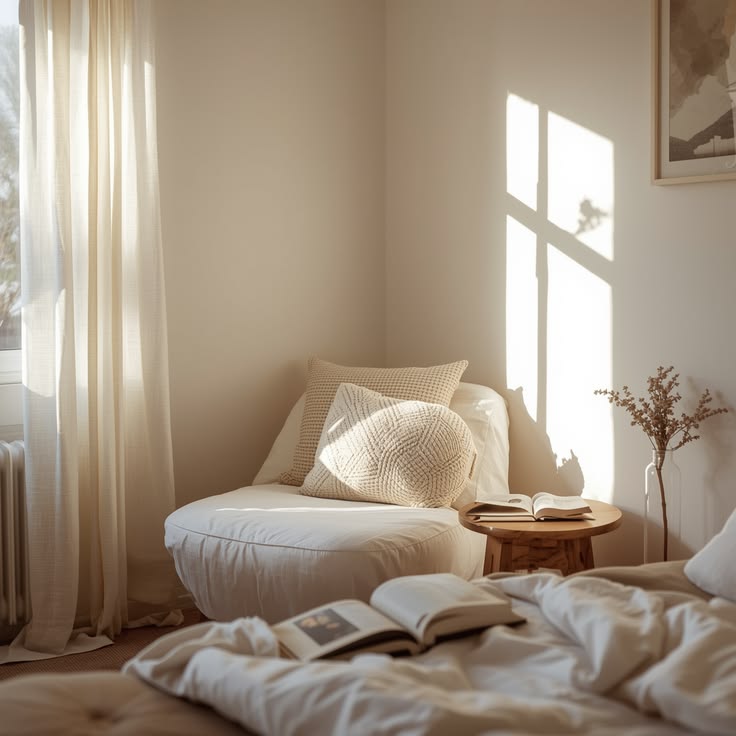
Instead of eliminating every noise, masking introduces a steady, predictable sound that makes sudden disruptions less noticeable. White noise, pink noise, and nature recordings are popular options.
Experiment with volume levels — the goal is a soft backdrop, not loud enough to become its own distraction.
Structural and furnishing changes can absorb or block sound before it reaches your ears. These approaches range from low-cost DIY fixes to more involved improvements.
Thick, floor-length drapes with a thermal lining reduce both light and sound transmission through windows.
Hard floors reflect sound. A large rug with a dense pad underneath absorbs footfall and echoes.
Adhesive weatherstripping and door sweeps close gaps that let hallway noise enter the bedroom.
A full bookshelf against a shared wall adds mass and breaks up sound wave paths.
Understanding approximate decibel levels helps you evaluate whether a noise source is likely to be disruptive during rest hours.
Decibel ranges shown above are reference points only. Personal comfort levels vary, and this table is not a clinical guideline.
When you share a home with others, behavioral agreements often matter as much as physical modifications. Establishing clear quiet hours benefits everyone.
Agree on a time when television, music, and loud conversations move to headphones or another room. Post the schedule where everyone can see it.
Run dishwashers and laundry machines before quiet hours begin. Place vibrating appliances on anti-vibration pads to reduce transfer through floors.
A simple door hanger or light indicator communicates when someone in the household is winding down, reducing accidental disruptions.
Earplugs and over-ear headphones are personal items some households choose to use. They may not suit every situation — for example, when audible alarms are required. Follow product instructions and seek qualified advice for hearing-related questions.
— Important note on personal protective tools| Option | Best For | Consideration |
|---|---|---|
| Foam earplugs | Blocking a wide range of frequencies | Single-use; ensure proper insertion technique |
| Silicone moldable plugs | Reusable daily use | Clean regularly to prevent buildup |
| Sleep headbands with speakers | Side sleepers who want audio masking | Keep volume at a low, comfortable level |
| Custom-molded earplugs | Long-term daily users | Require professional fitting appointment |