Natural Fibers
Cotton, linen, and bamboo-derived fabrics tend to breathe well. They may suit people who prefer a cooler sleeping surface.
Your bedroom layout, lighting, and material choices contribute to how a space feels in the evening. This guide covers practical, non-clinical adjustments based on interior environment principles.
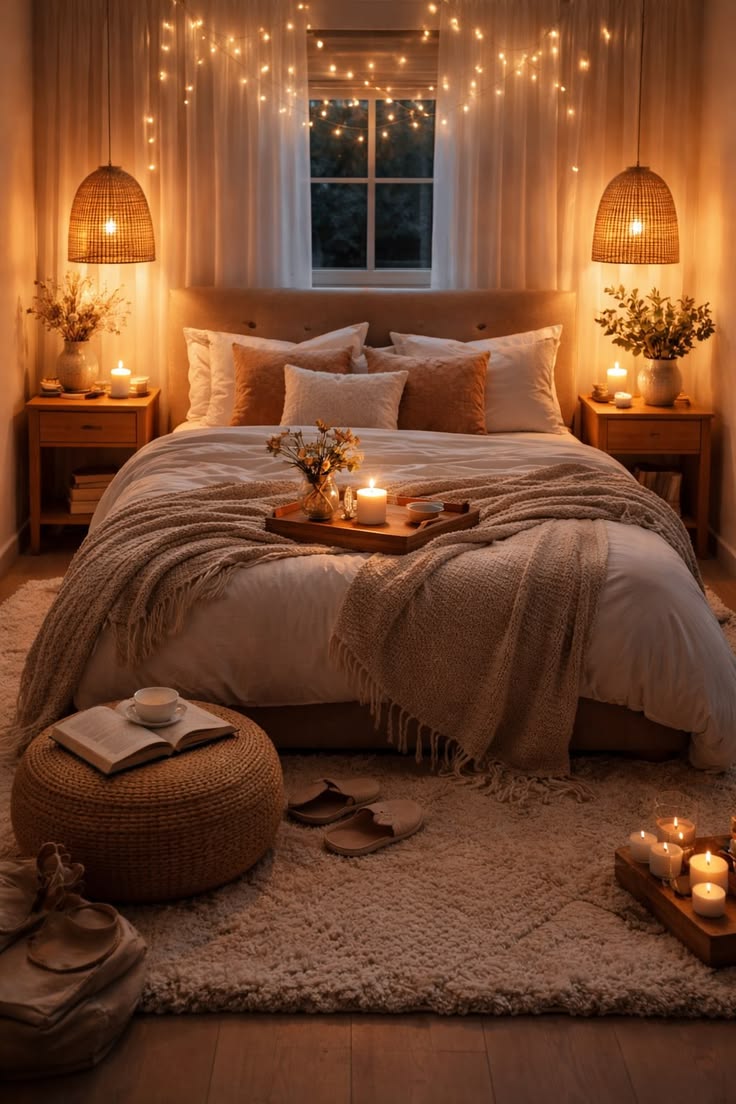
Rather than switching from bright overhead lights to complete darkness, a layered approach gives you control over how much visual stimulation reaches your eyes in the evening.
Consider installing dimmer switches on existing fixtures, adding a warm-toned bedside lamp (around 2700K color temperature), and using smart bulbs that can be scheduled to reduce brightness automatically.
The fabrics touching your skin and the layers covering you influence how warm or cool you feel throughout the night. Material selection is a personal preference informed by your local climate.
Cotton, linen, and bamboo-derived fabrics tend to breathe well. They may suit people who prefer a cooler sleeping surface.
Keep a lightweight duvet for summer and a heavier option for winter. Swapping layers is often more effective than cranking the thermostat.
Pillow height and firmness affect neck alignment. Try different fills — memory foam, down alternative, or buckwheat — to find what feels supportive.
A cluttered bedroom can create subtle visual noise that keeps the mind engaged. Organizing your space does not require a full renovation — small changes often make a noticeable difference.
Limit items on nightstands to essentials: a lamp, a book, and perhaps a glass of water. Store work materials, laundry, and exercise gear in closed containers or another room entirely.
If you charge phones or tablets in the bedroom, place them across the room rather than on the nightstand. This small distance reduces the temptation to check screens during wind-down time.
| Factor | What to Check | Simple Adjustment |
|---|---|---|
| Temperature | Does the room feel too warm or too cold when you lie down? | Adjust thermostat by 1–2 degrees or use a fan for air circulation |
| Humidity | Do you notice dry air causing discomfort? | Place a small humidifier or bowl of water near a heat source |
| Airflow | Is the air stagnant or drafty near the bed? | Reposition the bed away from direct vents; use a door draft stopper |
| Allergens | Do dust or pet dander accumulate quickly? | Wash bedding weekly; consider a HEPA air purifier |
Physical environment changes are often paired with consistent behavioural cues. These anchors mark the transition from daytime activity to evening quiet — as personal routines, not clinical protocols.
Dim lights throughout the home. Begin a low-stimulation activity such as reading or gentle stretching.
Set devices to do-not-disturb mode. Prepare the bedroom — adjust temperature, close curtains, arrange pillows.
Use only the dimmest light source if you need illumination. Keep the room dark and quiet as you settle in.
Editorial note: Small lighting adjustments — such as swapping bulb brightness or repositioning a lamp — are common starting points readers choose to explore. Any change should suit your household and budget. We do not cite individual outcomes or endorse specific products.
— Editorial policy, Enerbrightia